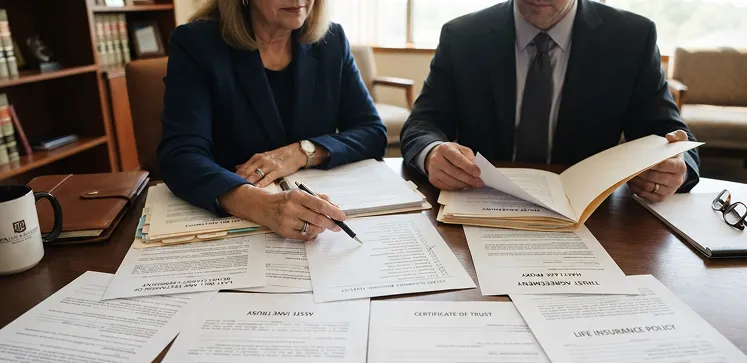
Estate planning is easier when you have the right documents ready. You will need information about your family, property, finances, debts, insurance, and existing legal documents.
For North Carolina residents, these records can help show what you own and how your assets are currently arranged.
This checklist of documents needed for estate planning in North Carolina can help you collect the information you are likely to need before your estate planning meeting.
Quick Document Checklist
Start with the major categories below. You may not need every document listed, but gathering as much as possible can make the planning process smoother.
| Document Category | Main Documents to Collect | Other Useful Records |
|---|---|---|
| Personal & Family | Birth certificates, marriage certificate, divorce records | Adoption papers, name-change records, family contact details |
| Property & Real Estate | Deeds, mortgage statements, property tax records | Lease agreements, vehicle titles, property insurance records |
| Financial | Bank statements, investment accounts, retirement accounts | Business ownership records, stock and bond statements |
| Insurance & Beneficiaries | Life insurance policies, annuity statements | Retirement beneficiary forms, account beneficiary designations |
| Debts & Taxes | Loan statements, credit card statements, tax returns | Business debts, gift-tax records, other tax documents |
| Legal & Estate Planning | Will, trust documents, powers of attorney | Health care directives, living will, related legal records |
| Special Circumstances | Guardianship records, special-needs documents | Prenuptial agreements, postnuptial agreements, business agreements |
| Existing Estate Plan | Previous wills, trusts, powers of attorney | Codicils, trust amendments, older beneficiary forms |
1. Personal and Family Documents Checklist
Start by gathering documents that show your family relationships and legal status.
You may need:
- Birth certificates
- Marriage certificate or divorce decree
- Adoption records
- Name-change documents
- Custody or family court orders
Also keep the full names, birth dates, and contact details of your spouse, children, and other people you may include in your estate plan.
If you have minor children, note who you would consider as their guardian. Keep any related legal or custody documents with the rest of your estate planning records.
2. Property and Real Estate Documents Checklist
Gather documents for any real estate or valuable property you own in North Carolina or elsewhere.
You may need:
- Property deeds
- Mortgage or home-equity statements
- Property tax records
- Homeowners’ association and insurance records
- Lease agreements
- Vehicle, boat, or RV titles
- Appraisals for valuable items, such as jewelry, art, or collectibles
Also make a simple list of what you own and how each property or asset is titled. This helps your estate planning law firm in North Carolina understand your assets and plan how they should be handled.
3. Financial Documents Checklist
Next, collect records showing your financial accounts and investments.
These may include:
- Checking and savings account statements
- Certificates of deposit
- Brokerage and investment account statements
- Stocks, bonds, and mutual funds
- Retirement accounts such as IRAs and 401(k)s
- Pension information
- Business ownership records
- Partnership or operating agreements
- Cryptocurrency and other digital asset information
For each account, note the financial institution, account type, approximate value, ownership, and current beneficiary designation.
A simple asset list can save considerable time during estate planning.
4. Insurance and Beneficiary Documents Checklist
Gather your insurance policies and records showing who will receive your assets after your death.
You may need:
- Life insurance policies
- Annuity contracts
- Long-term care insurance
- Retirement account records
- Beneficiary designation forms
Check each account or policy and make sure the primary and contingent beneficiaries are listed correctly.
Keep these records with your other estate planning documents so your attorney can review them with your overall estate plan.
5. Debt and Tax Documents Checklist
Make a list of your major debts and tax records before your estate planning meeting.
You may need:
- Mortgage and home loan statements
- Car and personal loan records
- Student loan documents
- Credit card statements
- Business debt records
- Recent federal and state tax returns
- Records of major gifts or capital gains
Focus on your main debts, income sources, and tax records. You do not need to gather every receipt or small expense.
6. Legal Documents Needed for Estate Planning
Estate planning may involve several legal documents that explain who can make decisions for you and how your assets should be handled.
You may need:
- Last will
- Revocable living trust
- Financial power of attorney
- Health care power of attorney
- Advance directive or living will
North Carolina has specific rules for these documents. For example, an attested written will generally requires the person making the will to sign it and have at least two competent witnesses sign it.
A North Carolina power of attorney must generally be signed and acknowledged according to state law.
A health care power of attorney generally must be signed in front of two qualified witnesses and a notary.
Because requirements can vary by document and situation, have your estate planning attorney review the documents before signing them.
7. Additional Documents for Special Circumstances
Some people may need extra documents based on their family, finances, or property.
You may need:
- Guardianship or special-needs records
- Prenuptial or postnuptial agreements
- Business ownership documents
- Partnership or operating agreements
- Buy-sell agreements
- Charitable giving records
- Documents for beneficiaries receiving government benefits
If you own property outside North Carolina, also gather the deeds, mortgage records, and other property documents.
Keep these records with your other estate planning documents so your attorney can review your full situation.
8. Existing Estate Planning Documents to Gather
Already have an estate plan? Gather your current and older documents before meeting with your attorney.
You may need:
- Current will and codicils
- Trust agreements and amendments
- Financial power of attorney
- Health care power of attorney
- Living will or advance directive
- Beneficiary designation forms
- Older estate planning documents
Your attorney can review these documents and check whether they still match your family, assets, and wishes.
It is especially helpful to review your estate plan after marriage, divorce, having a child, receiving an inheritance, starting a business, or buying or selling major property.
How to Organize Your Estate Planning Documents
You do not need a complicated filing system.
Create one secure folder, either physical or digital, with separate sections for family, real estate, finances, insurance, debts and taxes, and legal documents.
Prepare a simple asset inventory showing the approximate value, owner, account or policy number, and beneficiary for major assets. Keep original legal documents in a secure location and make sure the people who may need to find them know where they are stored.
North Carolina’s Secretary of State also maintains an Advance Health Care Directive Registry, where certain advance directives can be registered and accessed using registry information.
What Types of Documents Are Valid for Estate Planning?
Estate planning documents may be kept in original paper, copy, or digital formats, but the format does not automatically make a document legally valid.
- Originals: Keep signed originals of important estate planning documents in a safe place.
- Paper copies: Useful for your records and for sharing with your attorney or family.
- PDFs and digital copies: Good for backup and easy access, but a PDF alone does not make a document legally valid.
- Electronic wills: North Carolina allows electronic wills when specific legal requirements are met.
For most estate plans, keep the original signed documents plus secure digital backups and copies. Your estate planning attorney in North Carolina can confirm which documents require originals.
Final Thoughts
Preparing the documents needed for estate planning in North Carolina can be simple. Start by gathering your family records, asset information, financial documents, insurance records, debts, and existing estate planning documents.
You do not need to have everything perfect before meeting with an attorney. This checklist simply helps you organize the information they need to understand your family, assets, and wishes.
Because North Carolina has specific requirements for estate planning documents, an experienced North Carolina estate planning attorney can review your documents and help ensure everything is properly prepared and signed.