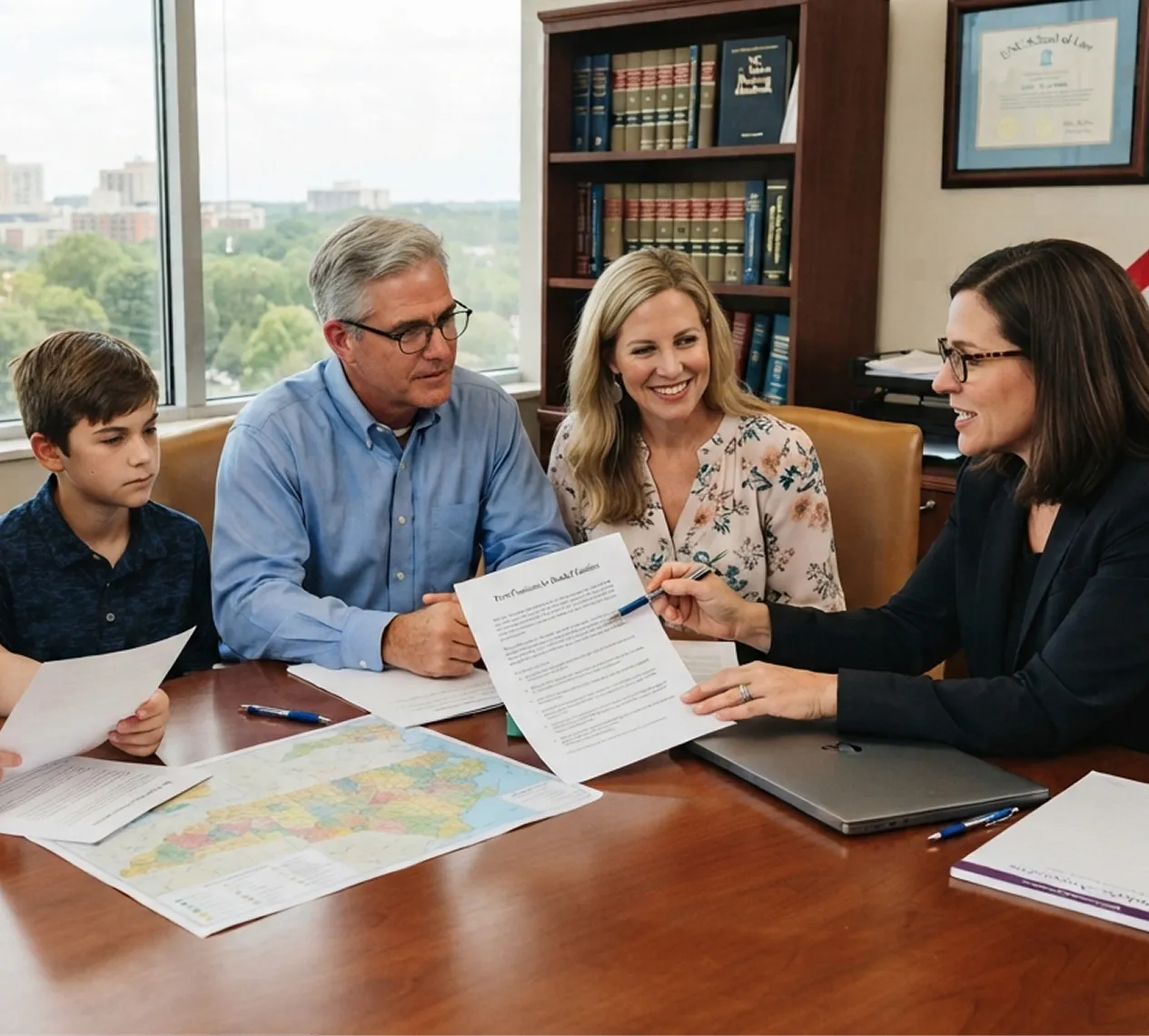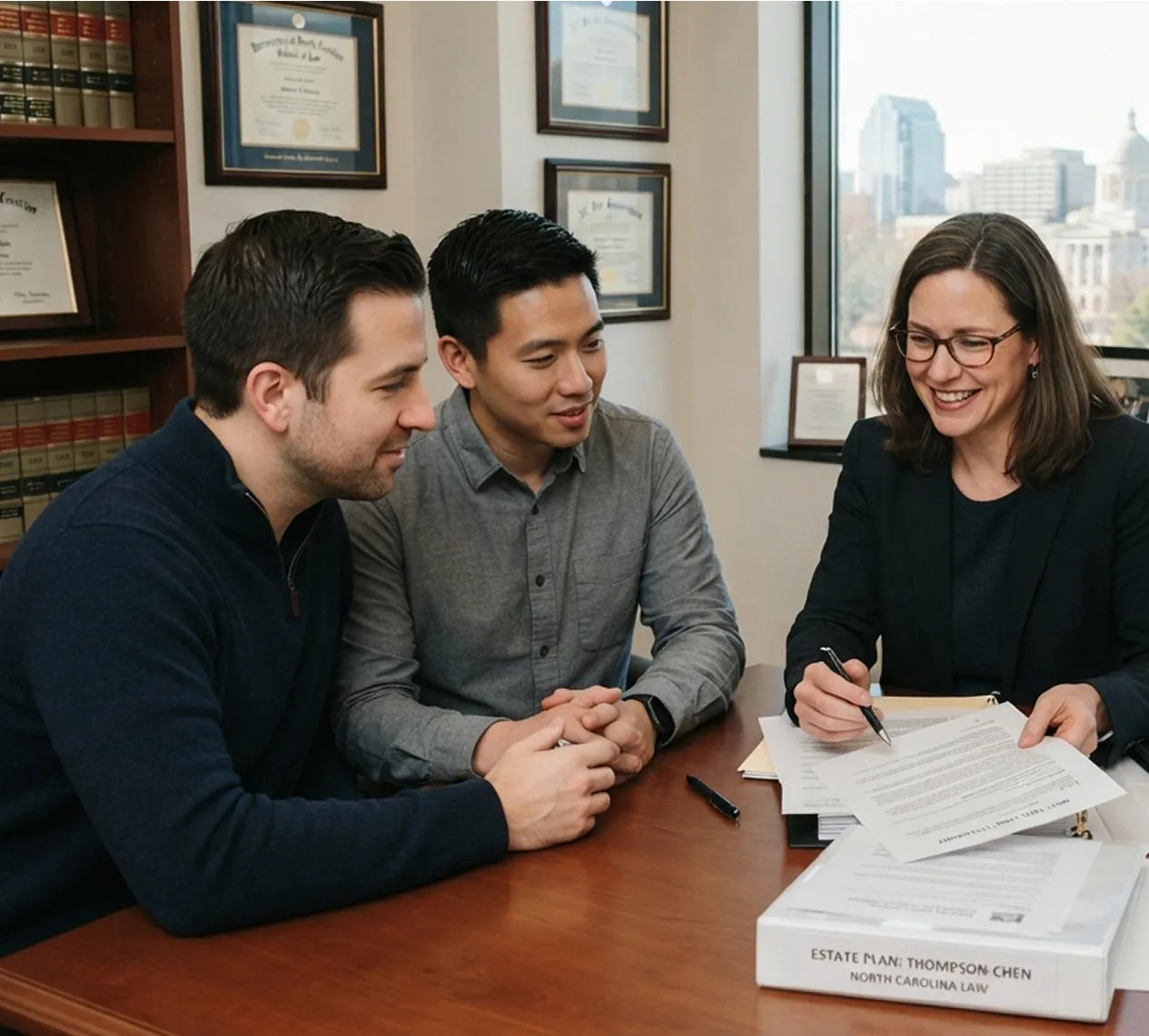

Getting married for a second time often means combining two families, financial responsibilities, and children from previous relationships. This can make decisions about property, inheritance, and future financial security more complicated.
Estate planning for second marriages in North Carolina helps protect your current spouse while ensuring your children receive the inheritance you intend for them. An experienced estate planning law firm can help you create a plan that addresses your family’s needs.
With the right legal guidance, you can prevent family disputes, clarify inheritance rights, and provide financial security for your loved ones.
North Carolina Laws for Estate Planning in Second Marriages
North Carolina inheritance laws can affect how your property is divided between your current spouse and children from previous relationships. If you die without a valid will, state intestate succession laws determine who inherits your assets.
Here are five important laws and legal considerations to understand:
- Intestate Succession: North Carolina General Statutes Chapter 29 explains how property is divided when someone dies without a will.
- Elective Share: A surviving spouse may have the right to claim a portion of the deceased spouse’s assets, even if the will provides less.
- Spousal Inheritance Rights: Your current spouse may have legal inheritance rights that affect what your children receive.
- Probate: Some assets must go through probate before beneficiaries can receive them.
- Property Ownership: Jointly owned property with survivorship rights may automatically pass to the surviving owner.
Understanding these laws can help you create an estate plan that protects both your spouse and children.
Common Estate Planning Challenges in Second Marriages
Blended families often have different expectations about inheritance, property, and financial security. Without clear planning, these differences can create unnecessary tension.
Some common challenges include:
- Balancing Inheritance: Providing financial security for a current spouse while preserving an inheritance for children from an earlier marriage.
- Protecting Children: Making sure children from previous relationships are not unintentionally excluded from receiving family assets.
- Managing Different Financial Responsibilities: Addressing differences in income, debts, savings, and property ownership.
- Avoiding Family Disputes: Reducing disagreements between a surviving spouse, stepchildren, and biological children.
- Planning for Future Relationships: Considering how remarriage, additional children, or changing financial circumstances could affect an existing estate plan.
Important Estate Planning Documents for Second Marriages
Having the right legal documents in place makes it easier to manage your estate and communicate your wishes. Couples should consider preparing these five essential documents:
- Last will: Explains how your property should be distributed and allows you to name an executor to manage your estate.
- Revocable Living Trust: Can help manage assets during your lifetime and distribute them according to your instructions, potentially avoiding probate for properly funded trust assets.
- Durable Power of Attorney: Appoints someone to handle financial matters if you become unable to manage them yourself.
- Healthcare Power of Attorney: Names a trusted person to make medical decisions on your behalf if you cannot communicate your wishes.
- Advance Directive: Explains your preferences for medical treatment and end-of-life care.
How to Protect Your Spouse and Children Through Estate Planning
One of the biggest concerns in a second marriage is making sure both your spouse and children are financially protected. The right strategy depends on your assets, family relationships, and long-term goals.
Consider these five planning strategies:
- Create Separate Inheritance Plans: Clearly identify which assets should go to your spouse and which should pass to your children.
- Establish a Trust: A properly structured trust can provide income or financial support for your spouse while preserving remaining assets for your children.
- Review Life Insurance Beneficiaries: Use life insurance to provide financial support to your spouse or children without relying entirely on your estate.
- Choose a Reliable Trustee: Select someone who can manage trust assets fairly and follow your instructions.
- Update Beneficiary Designations: Review retirement accounts, insurance policies, and payable-on-death accounts to ensure they reflect your current wishes.
Protecting Your Home and Other Assets
Your family home may have special emotional and financial importance, particularly if you purchased it before your second marriage or have children who expect to inherit it.
Here are four ways to protect your property:
- Clarify Home Ownership: Review the property deed to understand whether the home is individually or jointly owned.
- Consider a Qualified Personal Residence Trust or Other Trust Arrangement: Depending on your goals, certain trust structures may help plan for the future ownership or transfer of a home.
- Plan for Your Spouse’s Housing Needs: Consider whether your spouse should have the right to live in the home for a specific period or for the rest of their life.
- Protect Separate Assets: Keep clear records of property, investments, and inheritances you want to preserve for your children.
Prenuptial and Postnuptial Agreements in North Carolina
Prenuptial and postnuptial agreements can help couples establish clear financial expectations during a second marriage.
A prenuptial agreement is signed before marriage, while a postnuptial agreement is created after the couple gets married. In North Carolina, these agreements must meet applicable legal requirements to be enforceable.
They can address:
- Ownership of premarital property and family businesses.
- Responsibility for individual and shared debts.
- Rights to certain assets after death or divorce.
- Financial arrangements involving children from previous relationships.
- Treatment of inheritances and separate investments.
These agreements can complement an estate plan, but they do not replace wills, trusts, or beneficiary designations.
Estate Planning for Different Blended Family Situations
Every blended family has different needs. Your estate plan should reflect your household structure and financial responsibilities.
Consider these four common situations:
- Couples With Children From Previous Marriages: Use wills and trusts to balance inheritance between your current spouse and children from earlier relationships.
- Couples With Children From Both Relationships: Establish clear distribution instructions to avoid confusion about biological children and stepchildren.
- Couples With Children From a New Marriage: Update your estate plan to include new children and provide for their future needs.
- Couples Without Children Together: Consider how your separate assets should pass to your respective children, relatives, or other beneficiaries.
Common Estate Planning Mistakes to Avoid
Even couples who have an existing estate plan can overlook important details after remarrying.
Avoid these five common mistakes:
- Failing to update an existing will after getting married.
- Forgetting to review life insurance and retirement account beneficiaries.
- Assuming stepchildren automatically have the same inheritance rights as biological or legally adopted children.
- Overlooking North Carolina’s surviving spouse inheritance rights.
- Failing to review estate planning documents after major family or financial changes.
How an Estate Planning Lawyer in North Carolina Can Help
An experienced estate planning lawyer can help you understand North Carolina inheritance laws and create a plan that considers everyone’s needs.
A lawyer can assist with:
- Preparing wills, trusts, and powers of attorney.
- Explaining elective share rights and intestate succession.
- Reviewing prenuptial and postnuptial agreements.
- Planning inheritance for children from previous marriages.
- Addressing property ownership and asset distribution.
- Updating existing estate plans after remarriage.
Professional guidance can help prevent legal complications and make your intentions clear to your loved ones.
Final Verdict
Estate planning for second marriages in North Carolina requires careful consideration of your spouse, children, property, and financial responsibilities.
Without proper planning, state inheritance laws and outdated beneficiary designations may distribute your assets differently than you intended.
By preparing the right legal documents, considering trusts, reviewing property ownership, and working with an experienced estate planning lawyer, you can protect your current spouse while preserving the inheritance you want to leave your children.
A thoughtful estate plan gives your blended family greater financial clarity and peace of mind.